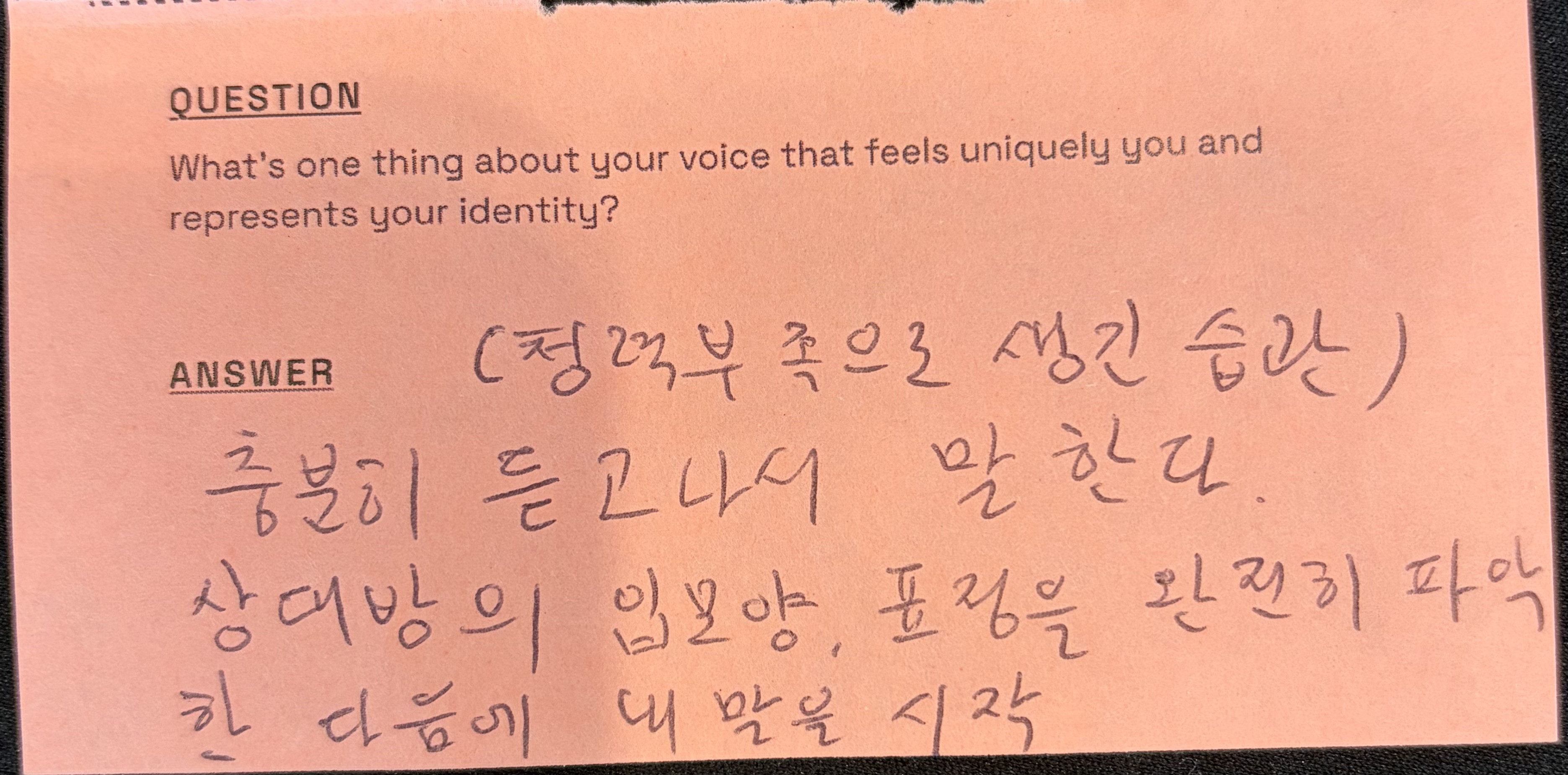
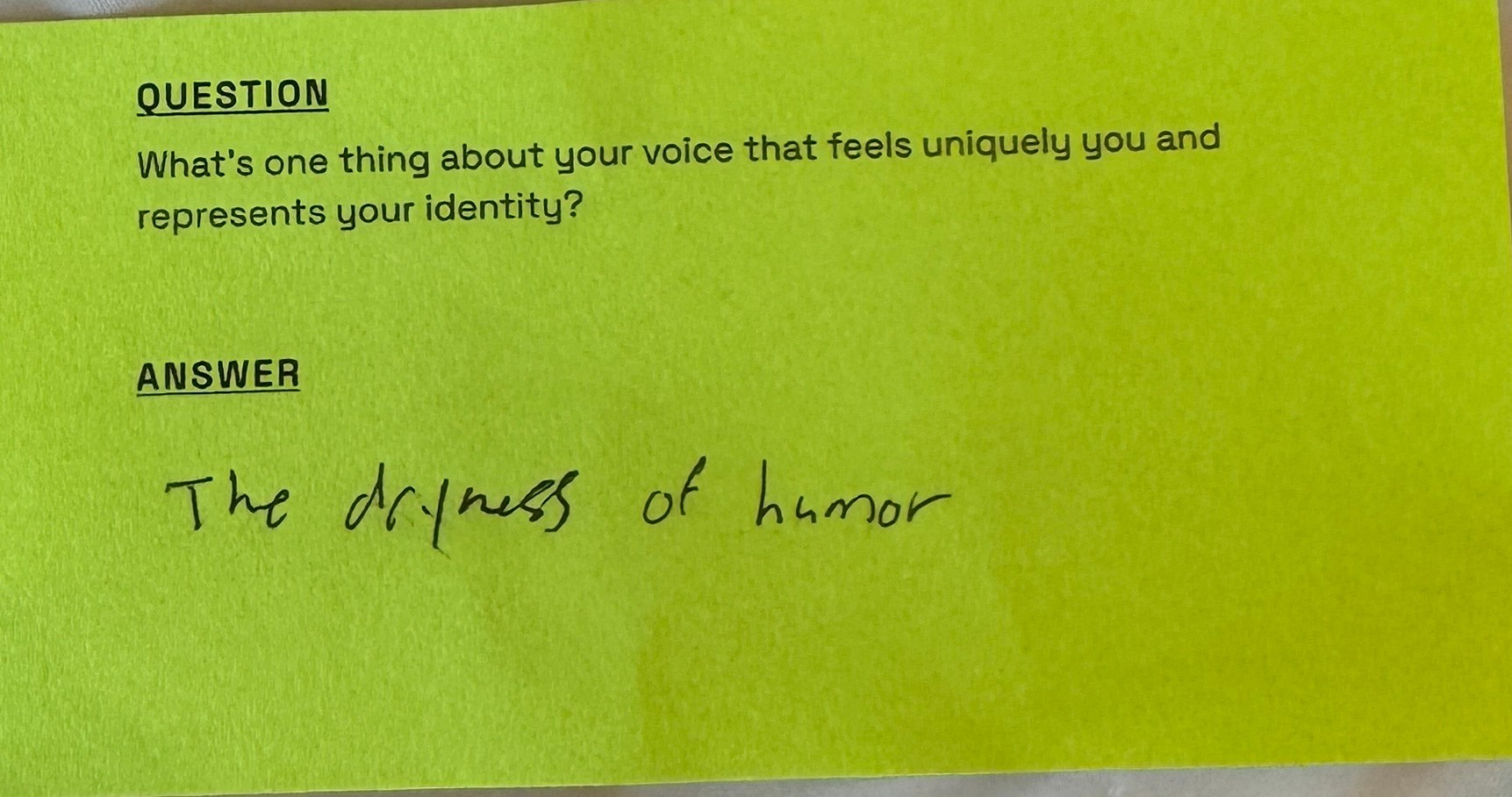
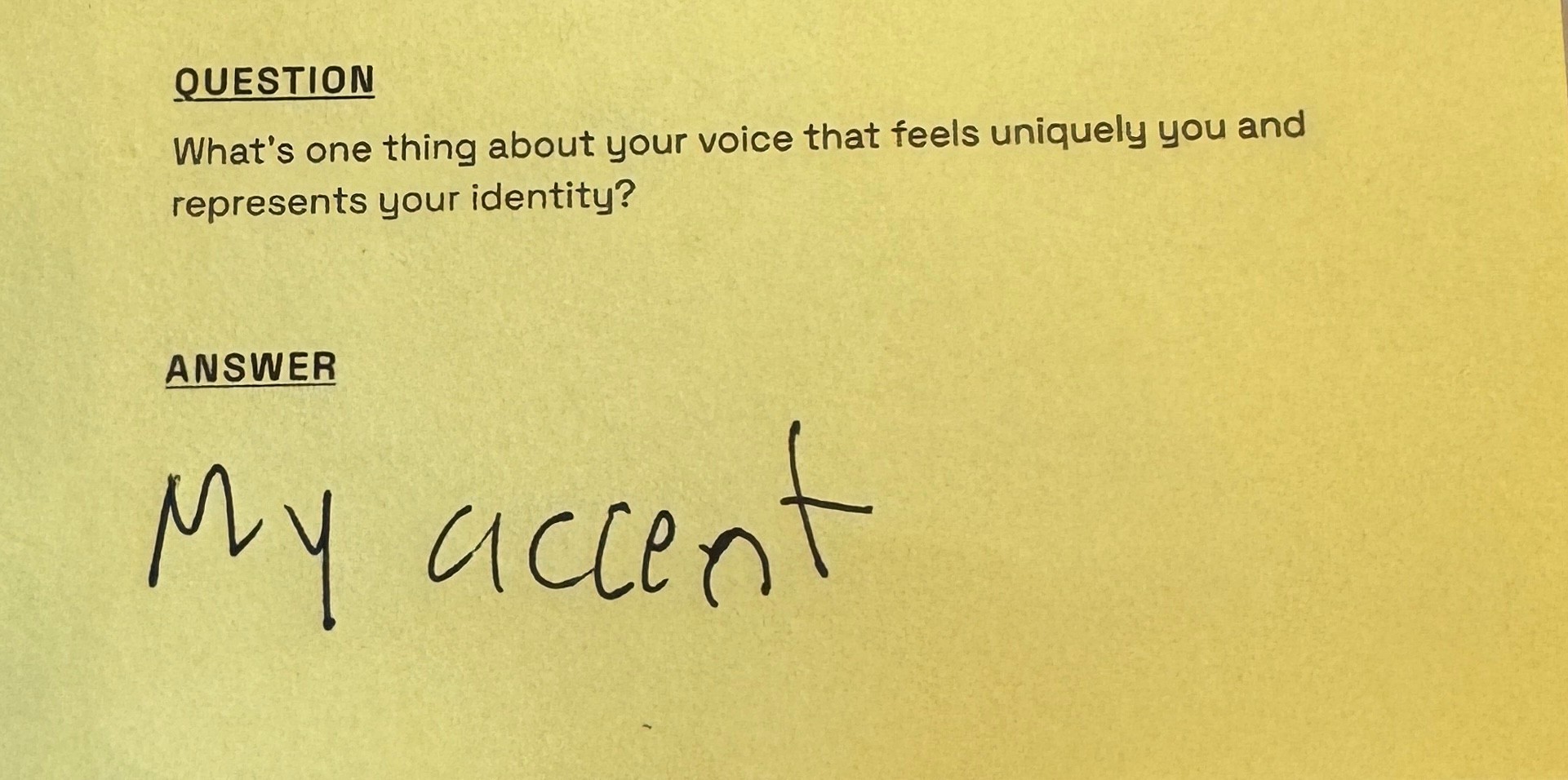
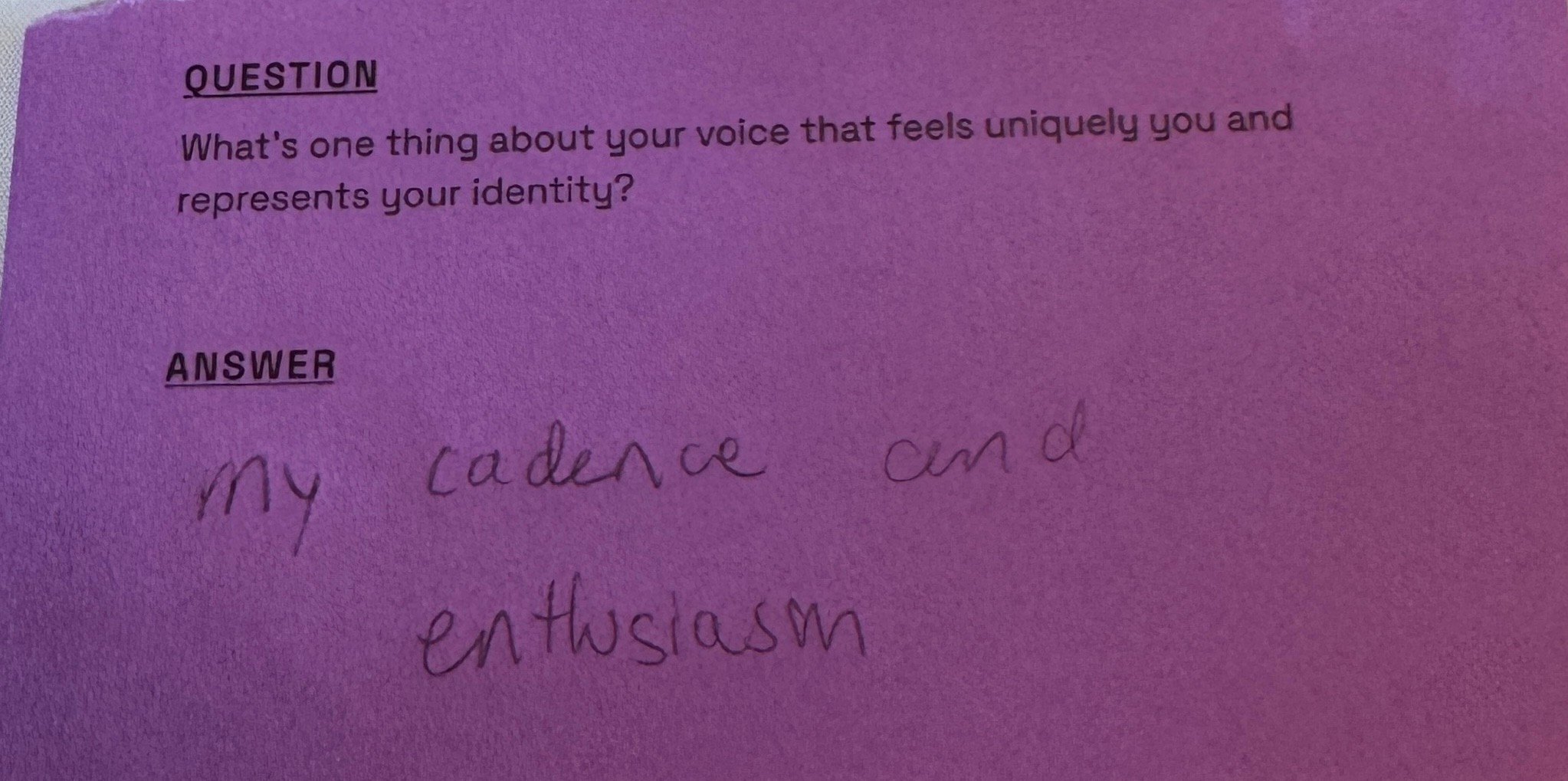
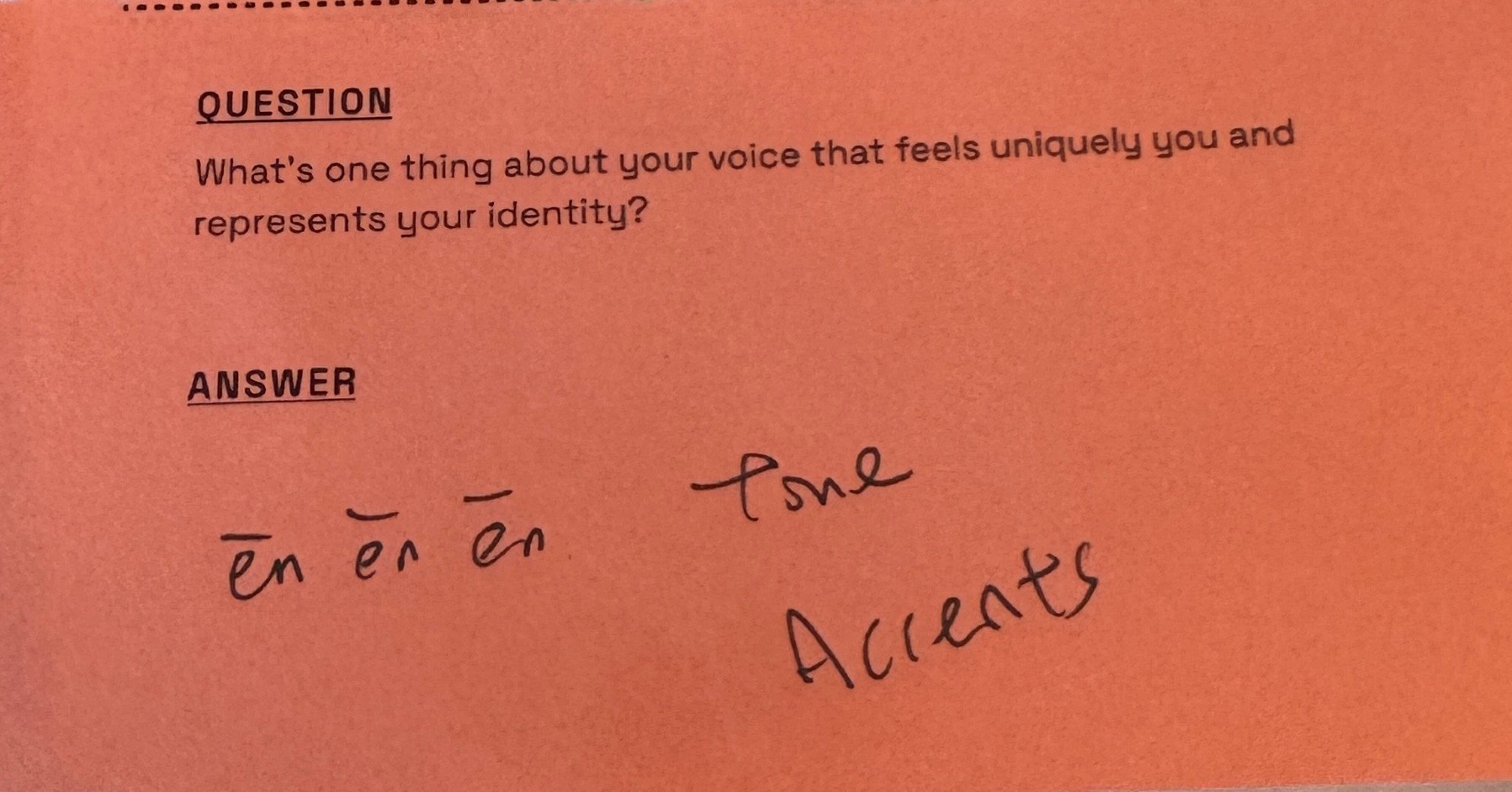
YOUR RESPONSES TO

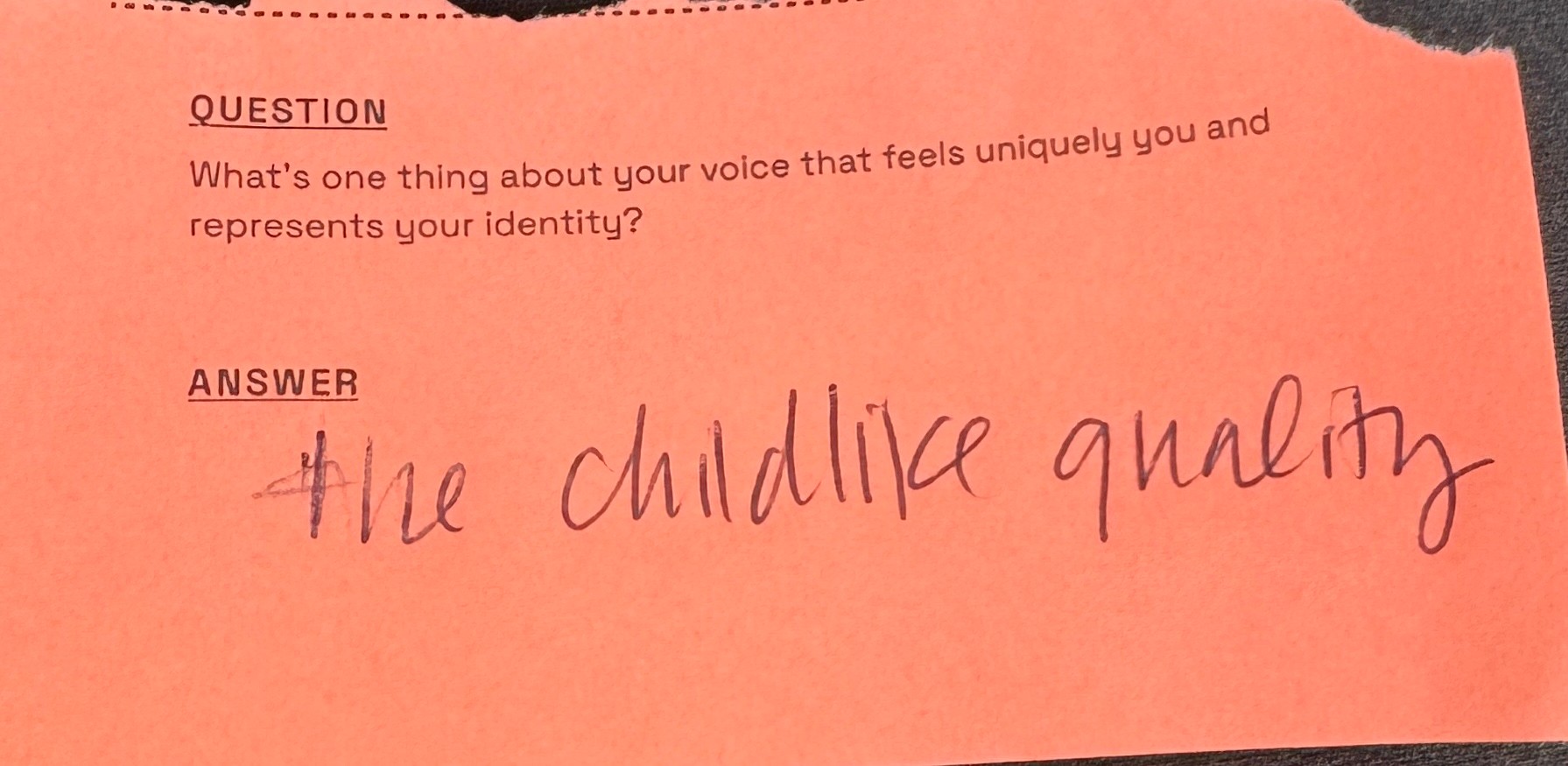
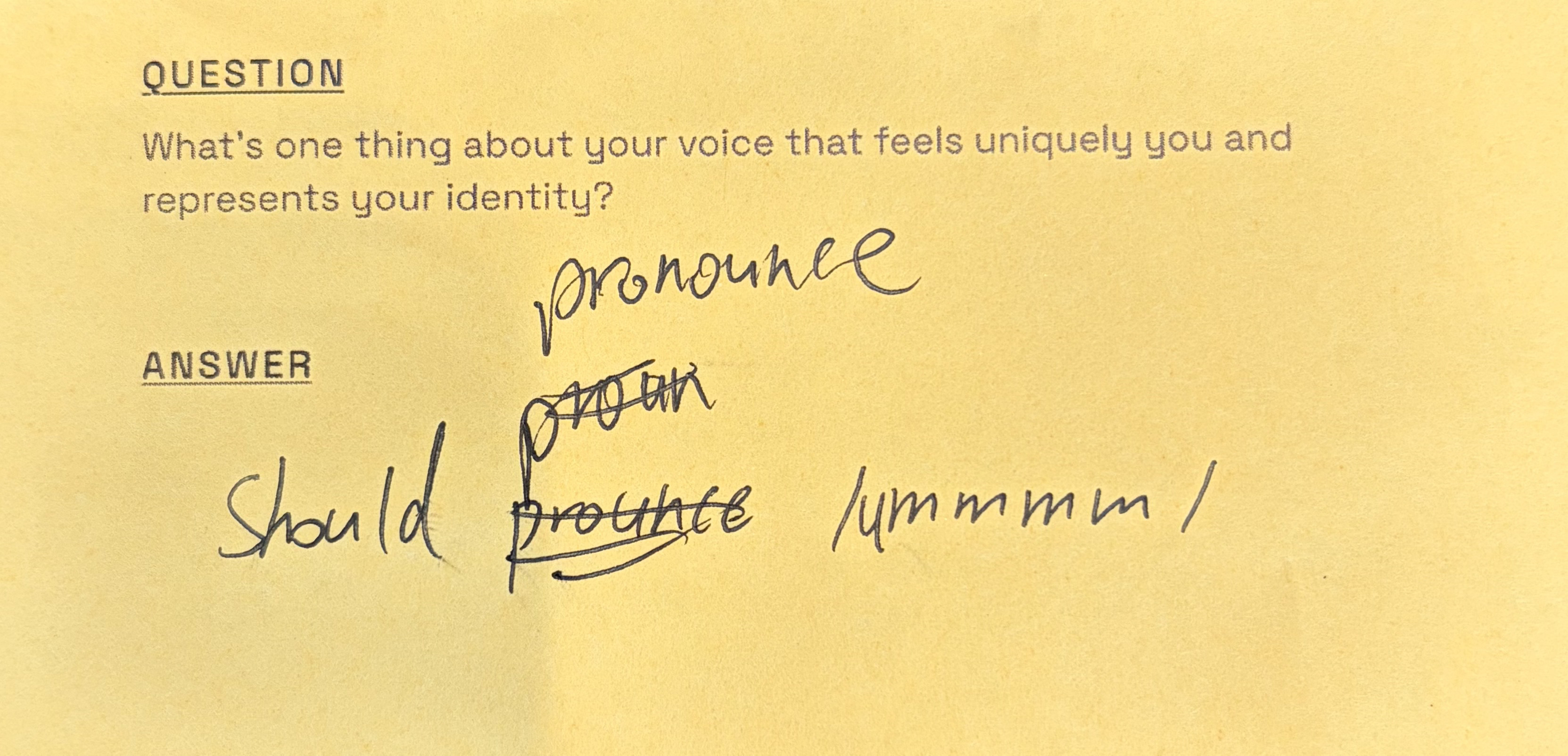
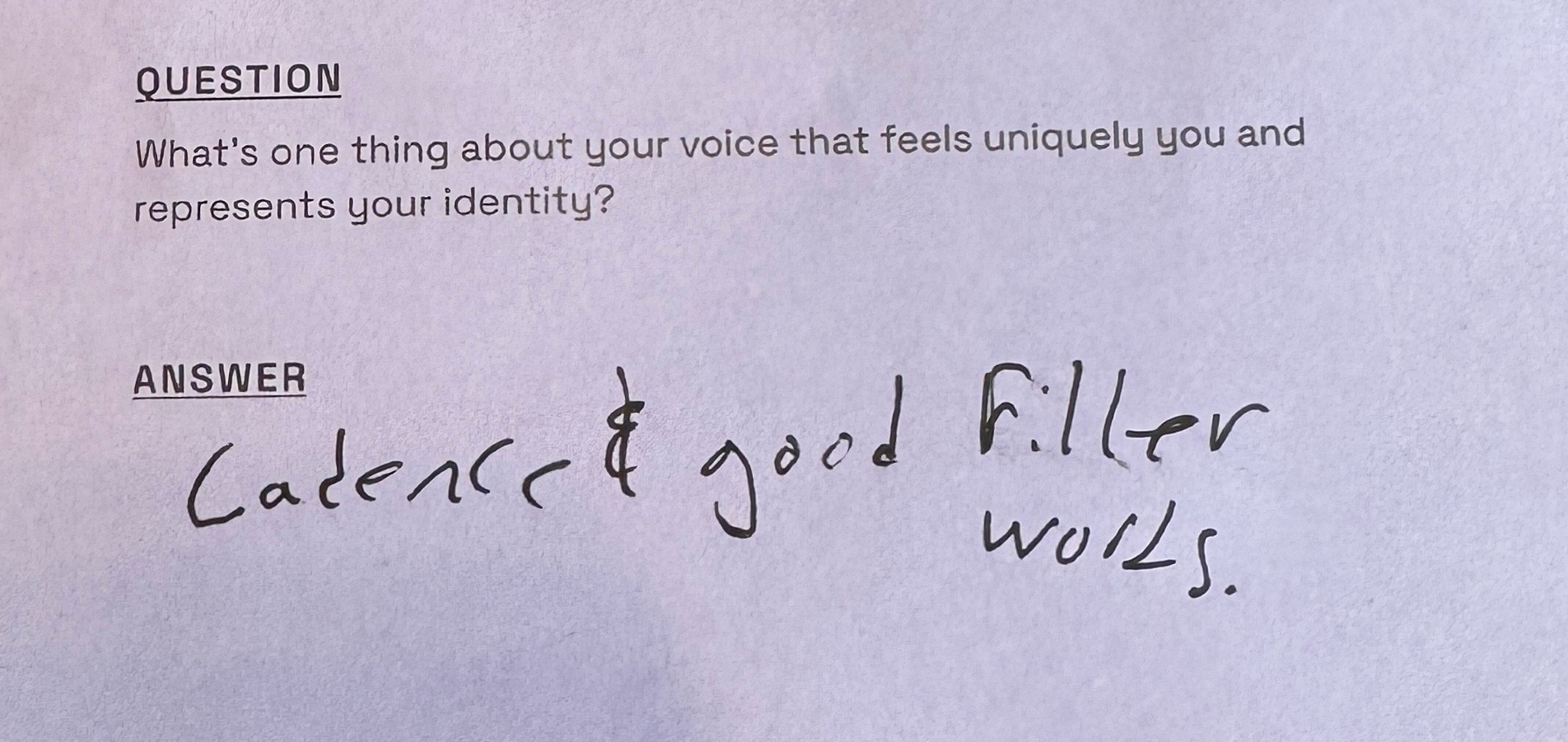
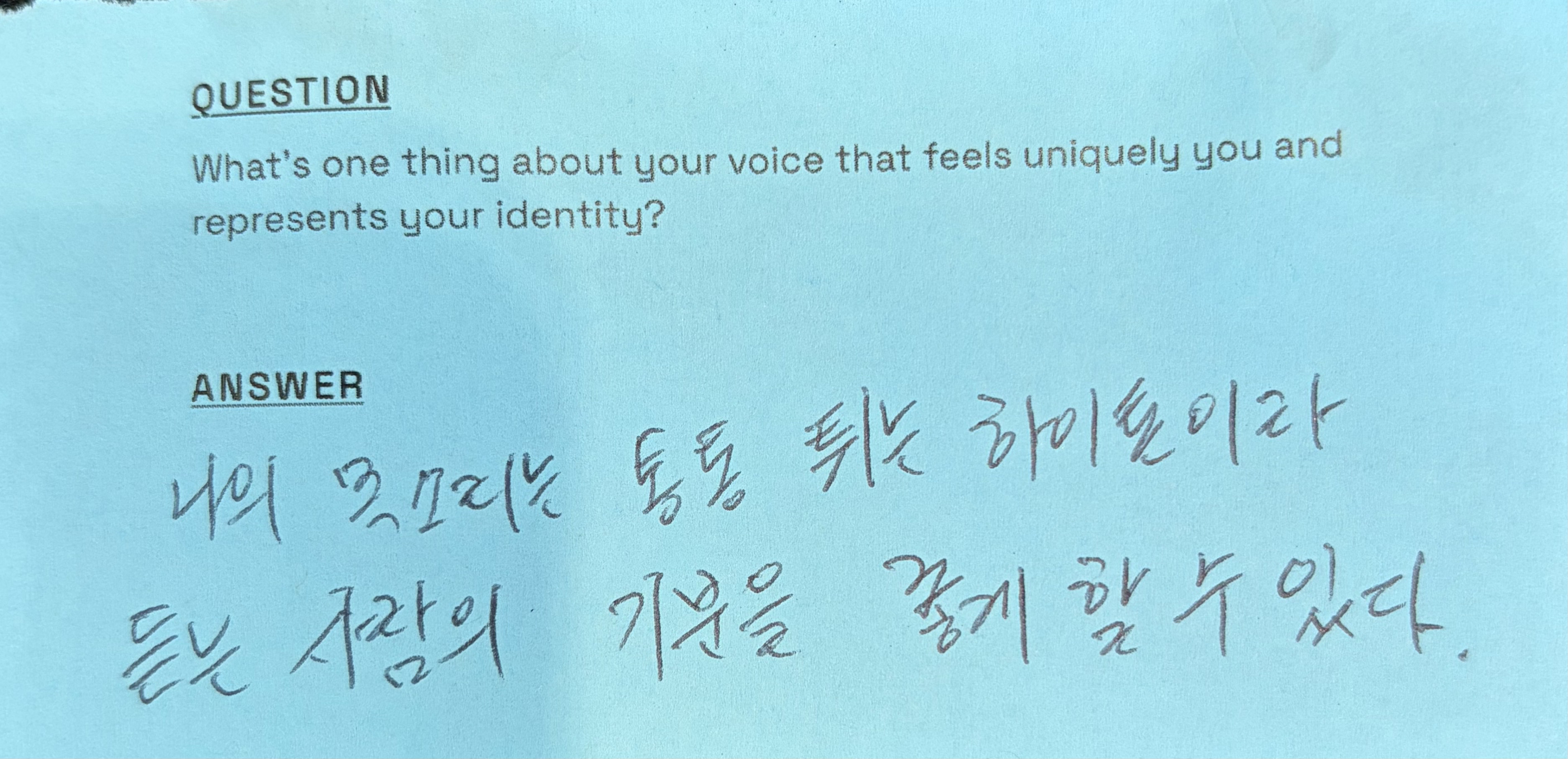
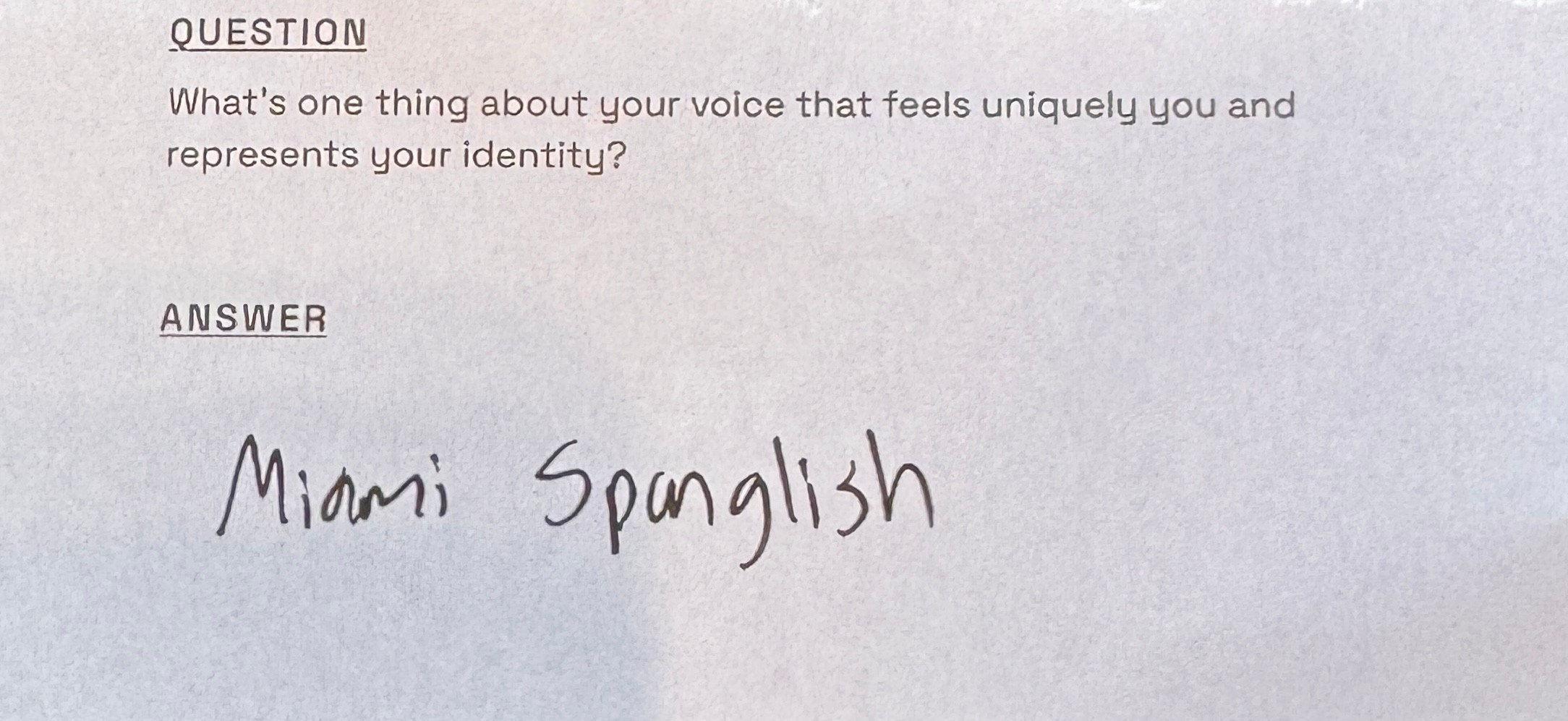
[What's one thing about your voice that feels uniquely you and represents your identity?]
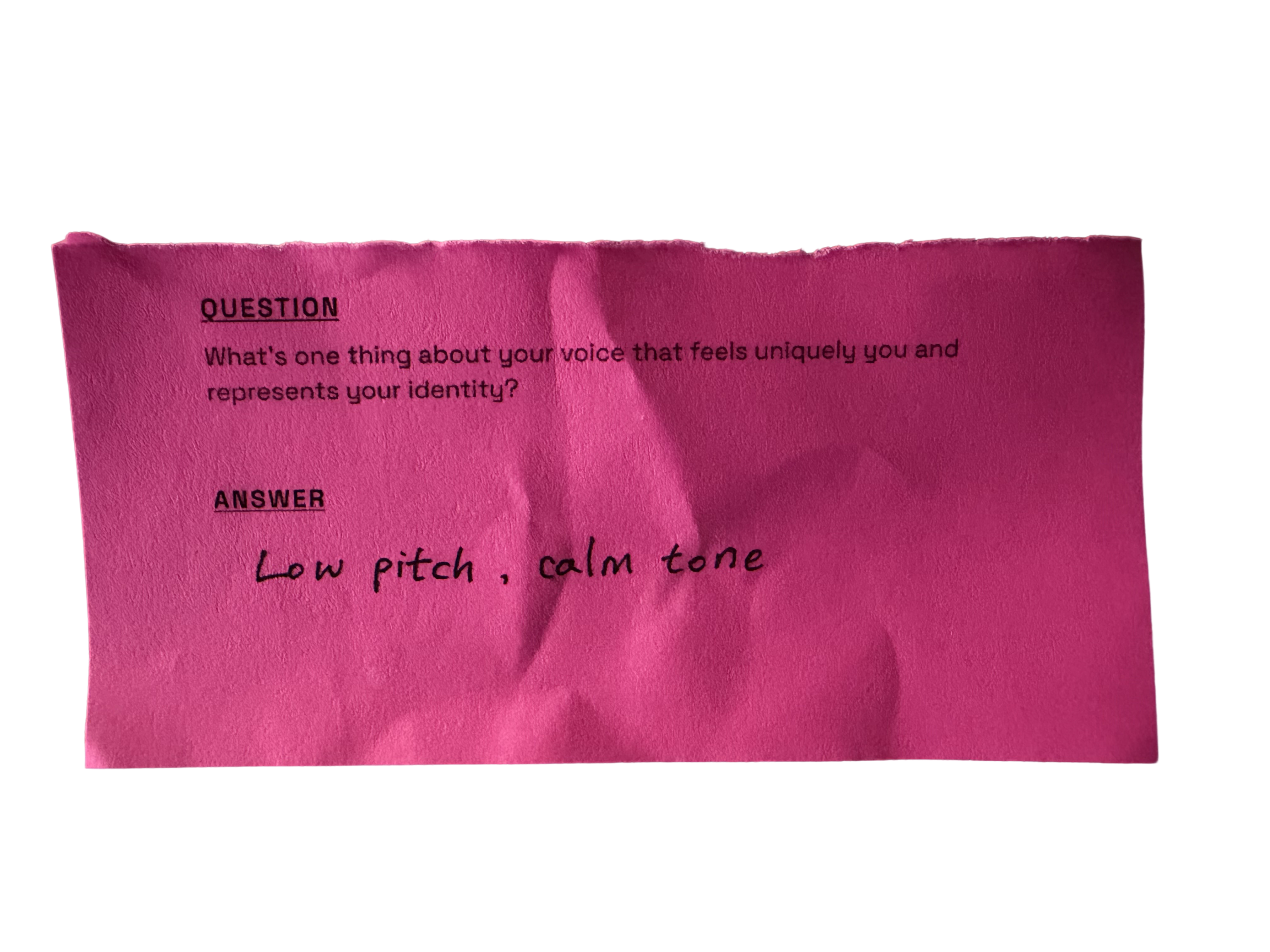
WHAT IS MMMM?

An interpretable human-centered voice cloning system for content creation that helps users understand, evaluate and shape their voice.

WHY WE BUILD THIS?

Currently, the voice cloning process is a blackbox. Limited interpretability and control hinder users’ ability to achieve outputs that align with their intended voice.

We spent months talking to people who use voice cloning tools. We wanted to understand what it actually feels like to hand your voice over to a machine. We conducted formative co-design sessions through a Research Through Design approach. Using a functional voice cloning prototype, we surfaced user motivations, pain points, and mental models of the system. Here is what we found.

  1. Users don't know what the system needs from them.

They're asked to record voice samples, but receive little guidance on what the system captures, what's still missing, or whether their recordings are sufficient.

  1. Users struggle to interpret why the output feels wrong.

When a cloned voice doesn't sound like them, they rely on intuition to evaluate it. Without shared vocabulary or structured evaluation, iteration becomes guesswork.

  1. The system doesn't adapt to how people create.

Existing tools apply the same settings regardless of content type, leaving users to bridge the gap between what the system produces and what their content actually needs.

How is mmmm DIFFERENT from other voice cloning products?

Our system shifts the relationship between humans and voice cloning tools, from a one-way transaction to a transparent, guided, and collaborative act of voice-making. It empowers content creators working with podcasts, audiobooks, and voiceovers with more control and transparency in their creation flow.

  • Interpretable voice capture

Our system makes recording transparent by showing what voice characteristics have been captured, what is missing, and whether the samples are sufficient to move forward.

  • Structured voice evaluation

Before generating the final output, users can compare cloned versions side by side with their original recording, helping them identify which version best represents their voice.

  • Content-type aware generation

The system adapts generation process to the user’s content context, such as podcasts, audiobooks, or voiceovers, reducing the gap between the model produces and what the creator needs.

TRY OUT MMMM

WATCH MMMM PRODUCT VIDEO

ACKNOWLEDGEMENT

  • We are grateful for all our research participants for sharing their stories and providing feedback to mmmm, all shaping our product in a meaningful way.
  • We are grateful for MS HCDE Capstone instructors for guiding us along the journey.
  • We use ElevenLabs API for our product.

Master’s CAPSTONE TEAM

Landscape with trees and lake

Mingjin Zhang

Researcher

miz007@uw.edu

boats at a dock

Gahui Yun

Researcher

gahuiyun@uw.edu

People laying in a park

Soyun Moon

Designer

soyunm@uw.edu

Field with grass and trees

Alex Chung

Designer

yehac@uw.edu

Showcase Time:

6/3/2026

Location:

DUB at UW

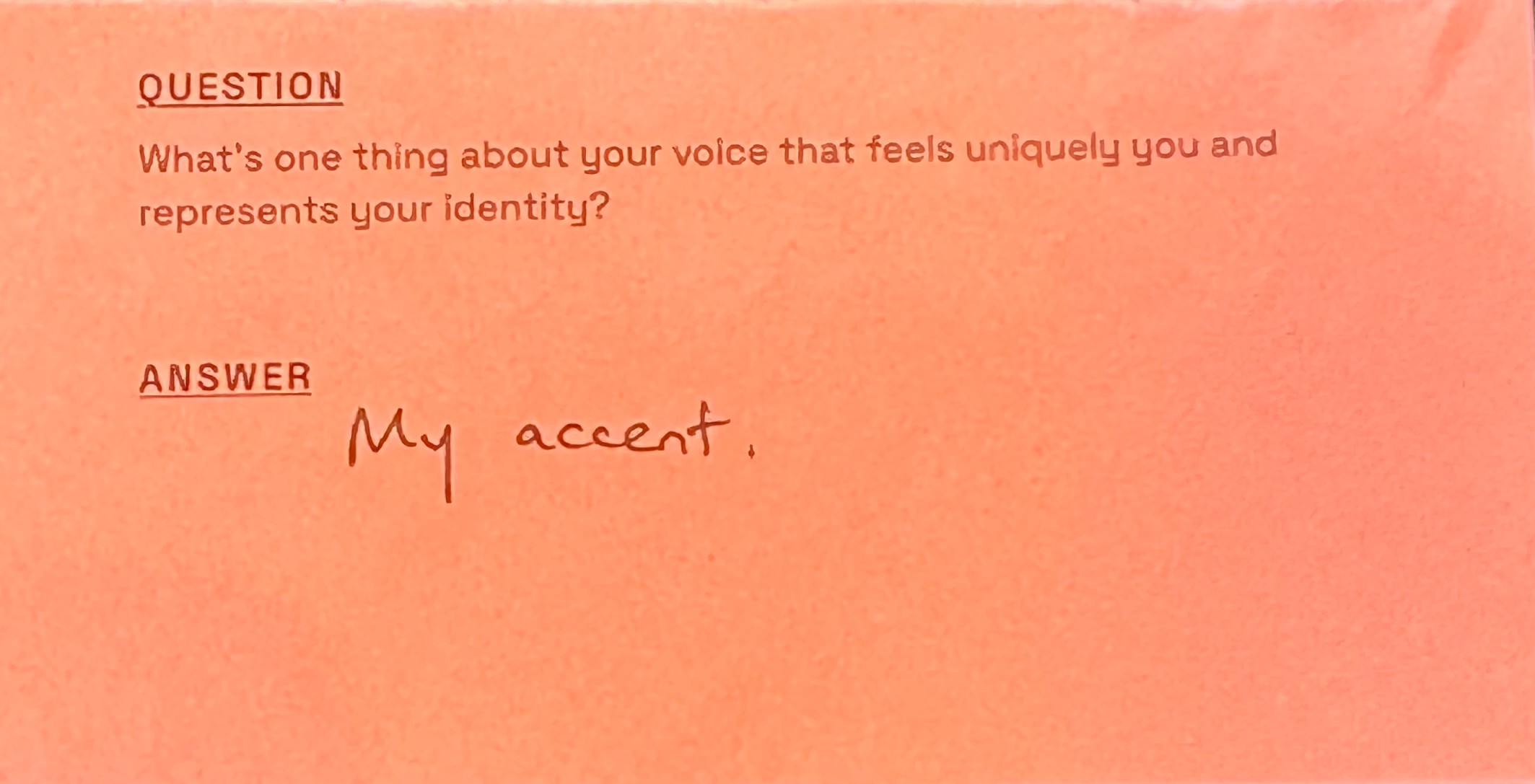
YOUR RESPONSES TO

[What's one thing about your voice that feels uniquely you and represents your identity?]
WHAT IS MMMM?

An interpretable human-centered voice cloning system for content creation that helps users understand, evaluate and shape their voice.

WHY WE NAME IT MMMM?

  • "mmmm" is the feeling of a voice before words form.
  • "mmmm" is that gut-check moment.
  • "mmmm" is the sound of genuine satisfaction, of something that sounds right., Soundcloud

WHY WE BUILD THIS?

Currently, the voice cloning process is a blackbox. Limited interpretability and control hinder users’ ability to achieve outputs that align with their intended voice.

We spent months talking to people who use voice cloning tools. We wanted to understand what it actually feels like to hand your voice over to a machine. We conducted formative co-design sessions through a Research Through Design approach. Using a functional voice cloning prototype, we surfaced user motivations, pain points, and mental models of the system. Here is what we found.

  1. Users don't know what the system needs from them.

They're asked to record voice samples, but receive little guidance on what the system captures, what's still missing, or whether their recordings are sufficient.

  1. Users struggle to interpret why the output feels wrong.

When a cloned voice doesn't sound like them, they rely on intuition to evaluate it. Without shared vocabulary or structured evaluation, iteration becomes guesswork.

  1. The system doesn't adapt to how people create.

Existing tools apply the same settings regardless of content type, leaving users to bridge the gap between what the system produces and what their content actually needs.

How is mmmm DIFFERENT from other voice cloning products?

Our system shifts the relationship between humans and voice cloning tools, from a one-way transaction to a transparent, guided, and collaborative act of voice-making. It empowers content creators working with podcasts, audiobooks, and voiceovers with more control and transparency in their creation flow.

  • Interpretable voice capture

Our system makes recording transparent by showing what voice characteristics have been captured, what is missing, and whether the samples are sufficient to move forward.

  • Structured voice evaluation

Before generating the final output, users can compare cloned versions side by side with their original recording, helping them identify which version best represents their voice.

  • Content-type aware generation

The system adapts generation process to the user’s content context, such as podcasts, audiobooks, or voiceovers, reducing the gap between the model produces and what the creator needs.

TRY OUT MMMM

WATCH MMMM PRODUCT VIDEO

ACKNOWLEDGEMENT

  • We are grateful for all our research participants for sharing their stories and providing feedback to mmmm, all shaping our product in a meaningful way.
  • We are grateful for MS HCDE Capstone instructors for guiding us along the journey.
  • We use ElevenLabs API for our product.

Master’s Capstone team

Landscape with trees and lake

Mingjin Zhang

Researcher

miz007@uw.edu

boats at a dock

Gahui Yun

Researcher

gahuiyun@uw.edu

People laying in a park

Soyun Moon

Designer

soyunm@uw.edu

Field with grass and trees

Alex Chung

Designer

yehac@uw.edu

Showcase Time:

6/3/2026

Location:

DUB at UW

YOUR RESPONse TO

[What's one thing about your voice that feels uniquely you and represents your identity?]
WHAT IS MMMM?

An interpretable human-centered voice cloning system for content creation that helps users understand, evaluate and shape their voice.

WHY we name it mmmm?

  • "mmmm" is the feeling of a voice before words form.
  • "mmmm" is that gut-check moment.
  • "mmmm" is the sound of genuine satisfaction, of something that sounds right.

WHY WE BUILD THIS?

Currently, the voice cloning process is a blackbox. Limited interpretability and control hinder users’ ability to achieve outputs that align with their intended voice.

We spent months talking to people who use voice cloning tools. We wanted to understand what it actually feels like to hand your voice over to a machine. We conducted formative co-design sessions through a Research Through Design approach. Using a functional voice cloning prototype, we surfaced user motivations, pain points, and mental models of the system. Here is what we found.

  1. Users don't know what the system needs from them.

They're asked to record voice samples, but receive little guidance on what the system captures, what's still missing, or whether their recordings are sufficient.

  1. Users struggle to interpret why the output feels wrong.

When a cloned voice doesn't sound like them, they rely on intuition to evaluate it. Without shared vocabulary or structured evaluation, iteration becomes guesswork.

  1. The system doesn't adapt to how people create.

Existing tools apply the same settings regardless of content type, leaving users to bridge the gap between what the system produces and what their content actually needs.

How is mmmm DIFFERENT from other voice cloning products?

Our system shifts the relationship between humans and voice cloning tools, from a one-way transaction to a transparent, guided, and collaborative act of voice-making. It empowers content creators working with podcasts, audiobooks, and voiceovers with more control and transparency in their creation flow.

  • Interpretable voice capture

Our system makes recording transparent by showing what voice characteristics have been captured, what is missing, and whether the samples are sufficient to move forward.

  • Structured voice evaluation

Before generating the final output, users can compare cloned versions side by side with their original recording, helping them identify which version best represents their voice.

  • Content-type aware generation

The system adapts generation process to the user’s content context, such as podcasts, audiobooks, or voiceovers, reducing the gap between the model produces and what the creator needs.

TRY OUT MMMM

WATCH mmmm PRODUCT VIDEO

ACKNOWLEDGEMENT

  • We are grateful for all our research participants for sharing their stories and providing feedback to mmmm, all shaping our product in a meaningful way.
  • We are grateful for MS HCDE Capstone instructors for guiding us along the journey.
  • We use ElevenLabs API for our product.

Master’s CAPSTONE TEAM

Landscape with trees and lake

Mingjin Zhang

Researcher

miz007@uw.edu
boats at a dock

Gahui Yun

Researcher

gahuiyun@uw.edu

People laying in a park

Soyun Moon

Designer

soyunm@uw.edu

Field with grass and trees

Alex Chung

Designer

yehac@uw.edu